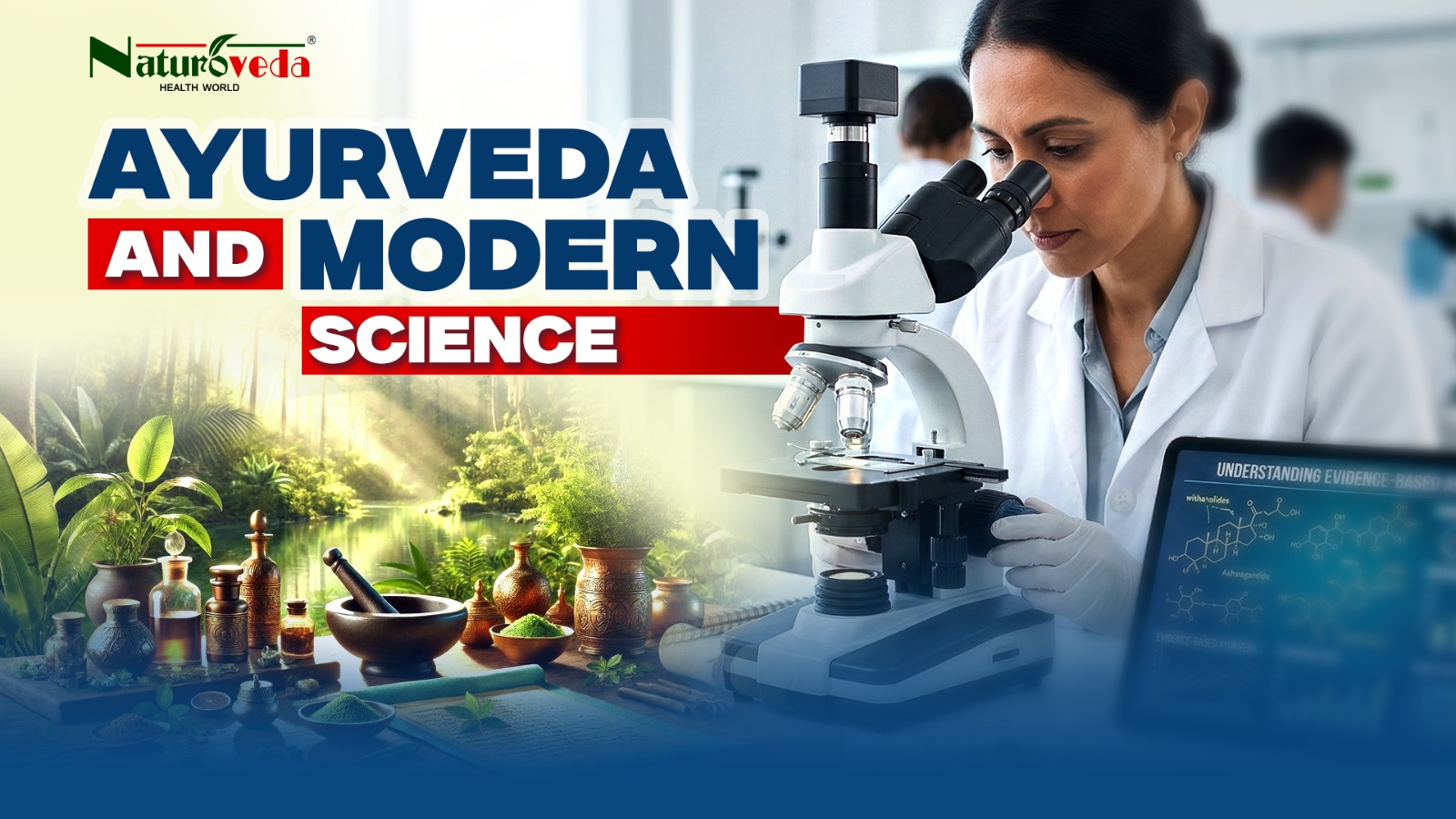

‘Is Ayurveda scientific?’ Many of us have heard this question that is often asked out of curiosity or with doubt. While consulting an Ayurvedic Doctor , probably this is the first question that comes to our mind. How can a 5000-year-old tradition still be considered scientific today?
Let’s Explore the Facts – Over a Cup of Tea
Ananya has been struggling with her Skin Allergies for years. There was hardly anything Ananya hadn’t tried – face washes, creams, antihistamines, ointments and whatnot! Within a couple of weeks, the same problem would return all over again, and gradually it developed into a chronic skin disease. Not only was she affected by the Skin Allergies, but her confidence also began to shatter. Her appearance was getting judged by those visible spots, overshadowing her natural beauty.
One day, she visited an Ayurvedic Clinic and was confronted with some questions that were never asked earlier. The Doctor asked, “How is your digestion?” “Do you often feel stressed?” “Do you often eat junk food?” Ananya got surprised, but somehow understood that her skin is the reflection of her inner system.
The Evidence:
As per Ayurveda, “Every disease is rooted in the Agni (Digestive fire)”. Interestingly, modern science now focuses on the “Gut-Microbiome” connection and has shown that 90% of our Serotonin is produced in the gut. Long before the gut-microbiome theory became popular, Ayurveda recommended multiple formulations like coriander-cumin-fennel tea, Triphala Churna, Takra or probiotic and more to clean your digestive system and strengthen your immunity.
Our second story is about the silent battle of the mind. Navin isn’t just stressed about his career and relationship, but is exhausted and unable to understand what is actually happening with him. Recently, whenever he prays, he has been disturbed by some “unwanted” thoughts or images of himself disrespecting the very deities he worships. Yes, it may sound unusual, but it happens with him, and despite having pure devotion, he feels intense guilt, as if he is sinning simply because of these thoughts. From this guilt-feeling behaviour, he has developed a habit of biting the inside of his cheek until it bleeds.
The Evidence:
In psychological terms, these are intrusive thoughts or body-focused repetitive behaviours that may happen when the stress hormones are elevated in our body. From an Ayurvedic perspective, this is an imbalance of Vata. An aggravated Vata causes mental turbulence, then the mind tends to become anxious, stressed and restless.
A landmark study in the Indian Journal of Psychological Medicine showed that Ashwagandha root extract reduces cortisol (the stress hormone) by 28%. In Ayurveda, herbs that help the body adapt to stress and restore hormonal balance are known as Adaptogens and Medhya Rasayanas (brain tonics). Some important herbs that help calm the mind and soothe the nervous system include Brahmi, Jatamansi, Holy Basil (Tulsi) and Mandukaparni (Gotu Kola).
How does Ayurveda work ?
Ayurveda works on the principle that every individual is unique. Unlike a machine with fixed parts, it treats the body as an ecosystem. Today, if two people have a headache, they both take the same aspirin, or the same paracetamol to treat a fever. But, in Ayurveda, if two people have a headache, one might be prescribed to drink warm ghee, and the other one might be told to take Guduchi. This is because Ayurveda doesn’t treat only the headache; it seeks the solution of the imbalance that caused it.
Understanding Doshas: The Biological Blueprint
According to Ayurveda, “Doshas” (Vata, Pitta, Kapha) are the three fundamental energies that exist in every person but in different ratios. This unique proportion forms an individual’s Prakriti or body’s constitution. The imbalance of this proportion, known as Vikriti, is the main cause of a disease.
For example:
If Vata is aggravated, it may cause anxiety, insomnia, joint pain and dryness.
If Pitta is aggravated, it may cause acidity, skin disease and inflammation.
If Kapha is aggravated, it may cause weight gain, Diabetes, congestion, etc.
So, instead of just asking about the disease or its symptoms, Ayurveda finds the true cause of the imbalance in doshas. Each needs individualised treatment because of the unique ratio of doshas, e.g. a patient with arthritis may have Vata dominance, and another patient may have Kapha-related inflammation. Depending on that, their medicines, diet plan, lifestyle advice, and detox therapies will differ.
The ‘Scientific’ Basis of Ayurveda
We call something scientific that follows a logical system and can be documented. It is grounded in minute observation, and it produces consistent results.
Ayurveda is based on the renowned classical texts, namely –
· Charaka Samhita
· Sushruta Samhita
· Ashtanga Hridayam
Why Ayurveda is effective for Chronic Diseases ?
Modern medicine is highly effective in emergencies. But chronic diseases develop gradually due to untreated imbalances in doshas. Conditions like Diabetes, Joint Pain, skin allergies, Psoriasis, Piles and Asthma never develop in a day. From subtle imbalances in the doshas, our metabolism, immunity, stress and digestion get affected. Ayurveda finds the root cause and provides constitutional rectifications.
Is Ayurveda Scientific?
The answer cannot just be a “yes” or “no”. In one experiment, an entire medical tradition cannot be tested. Instead, scientists and researchers examine each individual product, the ingredients they contain, the biological effects, the potential benefits, risks and so on.
Indeed, it is! Based on its structure, logic and medical formulations, it is scientific in every way. The emerging field of Ayurgenomics is trying to bridge the gap between Phenotype (what we see) and Genotype (what is in our DNA). As per this new theory, Ayurvedic classifications are not mere observations; these are the ‘visible markers’ of the underlying biological differences at the cellular level.
According to the World Health Organization, traditional medicine has contributed to important pharmaceutical discoveries, including aspirin and artemisinin.
How does Ayurveda sync with Modern Pharmacology?
Rather than isolating single compounds, modern network pharmacology focuses on multi-target actions and analyses the holistic, polyherbal principles of Ayurveda. Contemporary research validates that the complex chemical constituents work synergistically to boost therapeutic efficacy while lowering the side effects naturally.
Ayurveda, Modern Drugs & Ripple Effect:
Just think of adjusting a thermostat in a house. When we turn on the air conditioner to cool the room, the changing environment triggers the thermostat sensors to adjust and compensate. Our internal system works in a similar way.
For example, when we take a pill that might lower high blood pressure, our brain and hormone levels (nervous and endocrine systems) instantly notice the drop. To keep the situation stable, they fight back and might release hormones and send nerve signals to tighten blood vessels and speed up the heart rate to normalise the blood pressure levels.
In Ayurveda, the system works in a circular way as well. As per Ayurveda, a constant drive governs our body to maintain its natural equilibrium or “Samyata”. The body immediately fights back to restore balance whenever our internal system gets interrupted by any external force. Just as a modern drug lowers the symptom, triggers hormones and changes our gene expression, Ayurveda tells us that when a disturbance occurs in one area, it never stays isolated. Imbalance in Vata or Dosha affects the physical tissues, same as the microscopic cellular activity gets changed by systematic nervous response.
Are there clinical studies supporting Ayurvedic treatments?
Research supported by the U.S. National Center for Complementary and Integrative Health (NCCIH) indicates that certain Ayurvedic remedies may offer relief for conditions like Osteoarthritis and help manage symptoms of Type 2 Diabetes.
Clinical Evidence and Ayurvedic Trials May Benefit Knee Osteoarthritis
NCCIH organised a clinical trial which involves 440 patients suffering from Knee Osteoarthritis. They compared two Ayurvedic plant-extracted formulations with glucosamine sulfate and celecoxib. The treatment shows improvement and significant reductions in pain.
May Heal Chronic Stress
A prominent 8-week, randomized, double-blind, placebo-controlled trial looked at stressed adults to see how different amounts (125, 250 and 500 mg) of Ashwagandha root extract performed. This clinical study was registered with the Clinical Trials Registry—India (CTRI/2019/11/022100; date of registration 21 November 2019). It assessed the effect on the mood, behavioural and biochemical indices of chronic stress. The result shows that it safely reduces mild to moderate chronic stress at doses of 125 mg, 250 mg and 500 mg/day for 8 weeks.
May Help Lower Cholesterol
A review of 32 clinical trials found that the herbs garlic, guggul and black cumin may help reduce cholesterol levels in people with high cholesterol. The studies reported minimal side effects. Clinical studies show that the active compound thymoquinone present in black cumin or Nigella sativa is highly beneficial for blood lipids, blood pressure and inflammation. Human trials show that consuming about 5 grams of black cumin powder or oil for 8 weeks significantly reduces bad cholesterol or LDL and increases good cholesterol or HDL.
Beneficial for Cognition: Ayurveda and Pharma Industry use Mandukparni or Centella asiatica to treat various types of neurological problems and evidence shows this herb can lower chronic stress, mitochondrial dysfunction and inflammation. Its rich bioactive compounds are highly effective in improving cognition and memory.
May increase Testosterone Levels
In a trial involving 50 overweight people assigned male at birth between 40 and 70 years of age, participants who took an ashwagandha extract for eight weeks experienced increases of at least 15% in testosterone and DHEA-S levels compared with those who received a placebo.
Shilajit, another natural substance has been studied for its potential effects on testosterone. In a trial involving 96 healthy people assigned male at birth between 45 and 55 years of age, taking 250 milligrams of purified shilajit twice daily for 90 days was associated with increased testosterone and DHEA levels.
Is there any disadvantage of Ayurveda?
The findings mentioned above with several other ones are indeed promising, but some people assume that “natural” means it will have no complications or “completely safe”. Just like conventional medicine, Ayurveda is a personalised science that requires professional oversight. Self-prescribing potent herbs or following generalised doses can sometimes lead to unexpected side effects.
Plants contain natural chemical compounds too and some of these may interact with prescription medicines. Besides, certain Ayurvedic products may contain toxic metals that may be harmful. Not all Ayurvedic medicines or remedies contain harmful substances. Rather, a product labelled “Ayurvedic,” “herbal,” or “natural” doesn’t mean that the product is safe.
Like any medicine, herbal products can cause side effects, toxicity or bad drug interactions. This usually happens when they are misused, taken in the wrong dose or used without expert advice.
You can stay safe by choosing quality-controlled products and talking to a qualified healthcare professional.
Safe Ayurvedic treatment depends on three core pillars: proper dosage, product quality, and a personalised approach.
Dosage
One should take herbs and formulations in the correct dosage and, it is best to follow the guidance of a Qualified Practitioner to avoid unwanted side effects.
Quality of the Medicine
Choose authentic, pharmaceutical-grade preparations that are tested for purity, as low-quality or counterfeit products carry a risk of contamination.
Individual Body Type (Prakriti)
Treatments must match one’s unique constitution or individual body type. A remedy meant for a Kapha imbalance may not suit someone with a different body type and could aggravate Vata or Pitta.
Possible Side Effects of Ayurvedic Medicines
When practised appropriately, Ayurveda is considered safe, but side effects and complications may still rise in certain situations. Some common risk factors include:
Improper Dosage:
Consuming Ayurvedic medicines in higher-than-recommended amounts may cause digestive discomfort, nausea, allergic reactions or worsening of existing health conditions.
Risks of Self-Medication:
Buying herbs online or from general stores without professional assessment is a big “no” as it can lead to wrong dosage.
Low-Quality or Non-Authentic Products:
Not every product labelled “Ayurvedic” meets traditional safety standards. Poorly processed, adulterated, contaminated or expired items carry extra health risks.
Heavy Metal Contamination:
Certain traditional mineral or metal-based formulations (Bhasmas) require strict purification. Unregulated or poorly manufactured products can contain unsafe levels of heavy metals.
What is the WHO’s Global Centre for Traditional Medicine’s role?
Roughly 90% of WHO member countries rely on traditional medicine, yet they are increasingly asking for solid data to guide policies, clinical care and regulations safely and equitably.
To help bridge this gap, the World Health Organization (WHO) launched its Global Traditional Medicine Centre in Jamnagar, Gujarat, back in 2022, with backing from the Indian Government. The centre’s core mission is to build a stronger scientific foundation for traditional practices, so nations can make confident, informed choices about using them safely.
It also tackles practical challenges like quality control, safety regulations and how to safely incorporate evidence-based traditional therapies into mainstream healthcare.
The real goal is not to choose between traditional wisdom and modern science, but to implement scientific evidence to better understand traditional medicine and support its safe, effective and appropriate use.
What is the difference between raw herbs and standardised herbal extracts?
Raw Herbs:
As the word already denotes, raw herbs are the plant materials such as dried leaves, bark, roots, seeds and powders in a minimally processed form. The chemical composition may vary depending on various factors like plant variety, soil condition, harvesting, growing conditions, storage and processing. Two batches of the same herb may not contain the similar active compounds or efficacy.
Standardised Herbal Extracts:
Herbal extracts are created by pulling specific active compounds out of a plant using carefully monitored, lab-controlled methods. Then, the extract is adjusted to contain a specified amount or active constituent. This helps in maintaining greater consistency between batches and researchers find it easy to study the most beneficial part of the plant.
How are Ayurvedic medicines standardized for safety and purity?
Several factors such as identity of the ingredients, its purity, manufacturing process and testing play a crucial role in the safety and quality of Ayurvedic medicines. In India, official standards are maintained via Ayurvedic Pharmacopoeia of India. These standards include identifying the herbal ingredients or medicinal plants and assessing their efficacy and strength. The procedure goes through several testing like physicochemical analysis, laboratory methods such as HPTLC, HPLC, gas chromatography and also tests for contaminants.
Quality controllers also test the formulations for heavy metals, pesticide residues, harmful components and germs to ensure the medicines are safe, pure and effective to meet the regulatory standards.
Ayurveda: A Science-Based Tradition
Ayurveda, the 5000-year-old medical system has an extraordinary history, but history alone doesn’t constitute the scientific evidence. The most interesting development in Ayurveda is not the debate over whether it is “scientific” or not, but rather to test the traditional knowledge scientifically.
Modern technologies like advanced analytical chemistry, genomics, artificial intelligence, data science and improved clinical research methods are the new opportunities to explore the traditional practices that genuinely work.








Leave a Reply