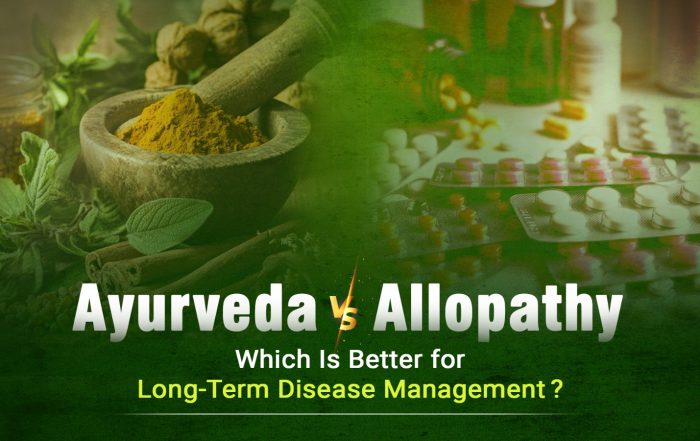
When a person has been diagnosed with a chronic illness such as Diabetes, Arthritis, Thyroid disorder, Skin disease or a Digestive disorder, one question arises prominently in the mind: Ayurveda vs. Allopathy, which is the best treatment system? Many often confuse it with the other. There are strengths, methods, and philosophies of both systems. The knowledge of the distinction aids one in following the correct path towards one’s well-being.
Chronic diseases or long-term diseases cannot fade away easily. They require frequent attention, discipline and modifications in lifestyles. Many people today are turning toward Ayurvedic Treatment in Kolkata for safer and more sustainable long-term disease management.
ADS FOR TESTADS FOR TESTADS FOR TESTADS FOR TESTADS FOR TESTADS FOR TEST
Then the difference is not just about the fast relief but also lasting control and long-term healing.
Understanding Ayurveda vs. Allopathy
Allopathy
The most common modern medical system known to people is Allopathy. This system includes hospitals, clinics, laboratory tests, operations and prescriptive medications. It is research-based and science-oriented, and that is why it is very effective in cases of emergency and acute conditions.
Strengths of Allopathy
- Quick fix: In most instances, drugs act swiftly.
- Emergency treatment: Rescue in disasters, acute diseases, heart attack and surgery.
- Sophisticated examination: Blood analyses, scans and images provide a clear view of the inside.
- Standardised therapy: The physicians adhere to internationally recommended guidelines.
As an illustration, in the extreme case of a patient with an emergency, allopathic drugs will put the situation under control. This speedy check is significant to avoid complexities.
Limitations in Long-Term Use

In the case of chronic disease management, Allopathy is primarily concerned with the management of symptoms, and not necessarily fixing the problem or targeting the root cause. Some medications may be required by a patient for a long period of time. Sometimes this leads to:
- Dependence on medicines
- Harmful effects on Liver, Kidneys and Stomach
- Limited lifestyle guidance
According to global health reports on chronic disease management by the World Health Organization, long-term medication dependency is rising. This is not to say that Allopathy is bad; it just implies that its main goal is management and control, which is not necessarily complete internal balance.
Ayurveda
Ayurveda is an Indian system of ancient healing that has a very holistic view of health. Rather than just managing symptoms, Ayurveda attempts to know the cause of the disease. It concentrates on the digestion, metabolism, lifestyle, sleep, stress and body constitution.
Ayurveda also emphasises that disease occurs when there is an imbalance in the three doshas, Vata, Pitta and Kapha. Through natural means, treatment is expected to restore this balance.
Strengths of Ayurveda
Ayurveda is highly effective in treating almost all the chronic diseases by targeting the root cause. It helps not only in healing but also in improving overall health.
- Root-cause approach
- Natural medicines
- Diet correction: Food is medicine.
- Lifestyle discipline: Daily routine, sleep cycle and management of stress.
- Individual care: There is never a single way of treating two different patients.
Ayurveda may be more effective in the long-term treatment of diseases such as skin diseases, joint disorders, hormonal imbalance or digestive disorders through a deeper healing process.
Limitations of Ayurveda
As Ayurveda does not intend to provide symptomatic relief, in some chronic diseases, there can be delayed results at the start as it tries to eliminate the root cause of the disease and thus aids in healing.
- There may be delayed results at the beginning.
- Needs diet and habitual discipline.
- Not viable in cases of emergencies.
- Needs skilled practitioners to find out the root cause by analysing ‘Nadi Parikshan’.
Ayurveda is effective in case the patient is ready to change and be guided with good intentions.
Core Difference in Philosophy of Ayurveda vs. Allopathy
The main difference between Ayurveda and Allopathy lies in how they see disease. This table shows that both systems are not enemies; they simply have different purposes and strengths.
| Aspect | Allopathy | Ayurveda |
| Focus | Symptoms & disease control | Root cause & balance |
| Speed | Fast relief | Gradual healing |
| Medicines | Chemical / synthetic | Natural/herbal |
| Personalisation | Standard protocols | Individual body type |
| Lifestyle Role | Limited | Very important |
| Emergency Use | Excellent | Limited |
This table shows that both systems are not enemies; they simply have different purposes and strengths.
What is Most Significant in Long-Term Disease Management?
Treatment of a chronic disease does not just involve the use of pills. It involves:
- Consistent diet habits
- Physical activity
- Stress control
- Good sleep
- Mental well-being
- Regular monitoring
Allopathy assists in making the disease manageable and avoiding emergent complications. Ayurveda also helps to make the body stronger internally; thus, over time, overdependence on drugs can be minimised.
For example:
- Diabetic patients can take allopathic drugs to manage the level of blood sugar.
- Simultaneously, Ayurvedic herbs and a meal regimen could enhance metabolism and insulin action with the passage of time.
Side Effects and Safety
Side effects are one of the key issues of long-term disease management. Allopathic medicines, in the course of years, can influence organs, or they can be the cause of secondary problems. Ayurveda in general has no known side effect as a result of the usage of natural substances and a selected dosage under the right medical guidance.
Nonetheless, even Ayurveda is dangerous in self-medication. Natural does not necessarily mean safe when consumed in an unsuitable amount. The important aspect is the qualified medical guidance in both the systems.
Lifestyle and Discipline of the patient
Ayurveda highly lays stress on discipline. It expects the patient to:
- Eat at fixed times
- Avoid junk food
- Follow sleep cycles
- Do Yoga or breathing
- Manage stress
Allopathy, however, has no such strict routines. This makes Allopathy simpler than it is, transformative to many people, although not always long-term.
Integration: A Moderate Solution
As a matter of fact, not everything depends on a winner in the debate. Nowadays, most Doctors and wellness gurus embrace integrative healthcare, which translates to utilising the merits of the two systems prudently.
For example:
- Apply Allopathy in cases of emergencies
- Choose Allopathy in acute infection
This integrated method usually yields superior long-term outcomes than a situation where one system is selected blindly.
Psychological and Emotional Effect
Chronic diseases not just impact physically but also psychologically i.e. on the confidence and tranquillity. A holistic approach of Ayurveda, such as Meditation, Yoga and Deep breathing, frequently makes patients emotionally stronger. This mental care plays a role that is vital in the long term healing process.
Allopathy tends to be more concerned with physical manifestations, but contemporary medical care is slowly becoming aware of the significance of mental health as well.
Cost Consideration
Cost is also a factor in making the decision. Allopathy can be accompanied by regular examinations, consultation with specialists, and branded medications, which can turn out to be expensive in the long run. The Ayurvedic therapies might seem to be expensive in the short term, as they involve customised medicines, but prevent reliance on repeated prescriptions, in the long term.
The actual cost comparison is based upon the condition of the patient and the treatment plan.
Ayurveda vs. Allopathy, which is better?
There is no universal answer. The better system depends on:
- Nature of the disease
- Stage of the problem
- Health, lifestyle and discipline of the patient
- Doctor’s expertise
- Personal preference
Allopathy is obviously better in case a person requires immediate alleviation or a surgical procedure.
Ayurveda is very useful in case a person wants to heal his or her inner self gradually and correct his or her lifestyle.
Final Thought
Health is not the lack of illness; it is harmony, vitality, tranquillity. Allopathy offers speed and accuracy. There is depth and sustainability in Ayurveda. Rather than making a blind decision, by being educated about both the systems, an individual will be in a better, safer position to make lifetime wellness choices. If you are looking for natural healing options, you can explore our detailed Ayurveda Consultation Services.
About the Author:
About the Author:

Vestibulum ac diam sit amet quam vehicula elementum sed sit amet dui. Donec rutrum congue leo eget malesuada vestibulum.